Understand findings
Gait analysis, clinical orthopedic examination and x-rays are often part of the planning for orthopedic procedures. If it makes sense, CT, functional tests or further imaging complement the decision.
Operations & anesthesia
If an operation is necessary, we explain every step in an understandable way: from the diagnosis and release of anesthesia to surgical monitoring and waking up peacefully.
Before the operation
Most interventions are planned. The more accurately we assess your animal in advance, the better we can tailor the operation, anesthesia and aftercare.
Gait analysis, clinical orthopedic examination and x-rays are often part of the planning for orthopedic procedures. If it makes sense, CT, functional tests or further imaging complement the decision.
Before anesthesia, we check the individual risk. This includes a clinical examination, laboratory values and, depending on the patient, other examinations such as ultrasound or X-rays.
We tailor anesthesia and treatment to your age, findings, previous illnesses and procedure. You know what is planned and which steps are important afterwards.
On the day of the operation
As a rule, your animal should be fasting before anesthesia. Drinking is allowed. Please take your dogs for a walk beforehand so that they can defecate and urinate.
Do not feed unless otherwise agreed.
Cats can often be dropped off early so that they arrive in peace.
Depending on planning, dogs come to the clinic directly on the surgery date or a little earlier.
After sedation, we establish a venous access for anesthesia and medication.
Anesthesia & surgery
Standardized processes in preparation, surgery and the recovery phase help to keep safety and quality of care consistently high.
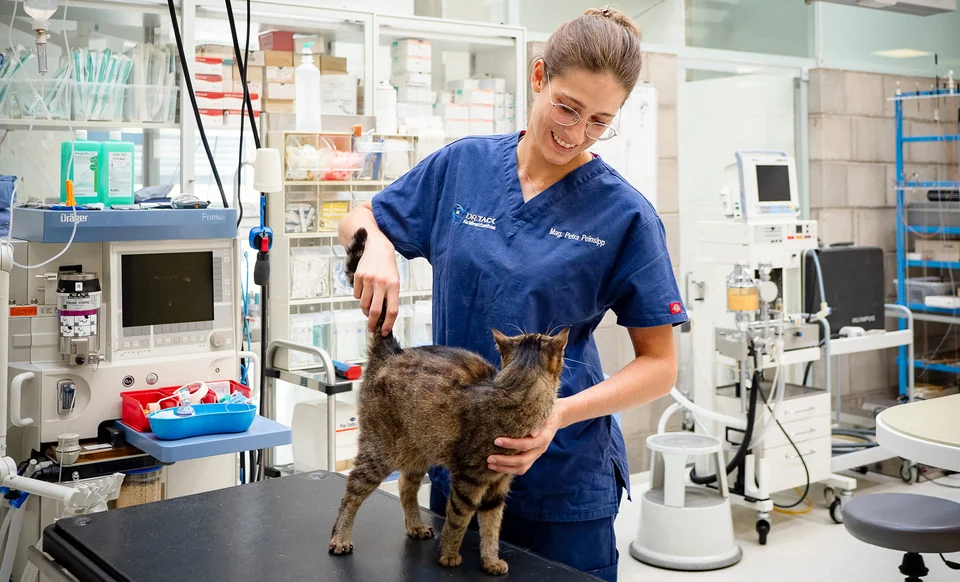
Hair removal, cleaning and disinfection take place in the preparation room. Anesthesia is induced, the patient is intubated and connected to monitoring.
The operation takes place in the operating room with sterility, positive pressure ventilation, intraoperative imaging and an operating team made up of several people.
During the procedure, an experienced anesthesiologist monitors vital signs and adjusts the anesthesia based on the measured parameters.
After the operation
After the procedure, your animal will go to the recovery station. There we make sure you wake up safely and as calmly as possible.
Depending on the procedure, we provide support with heat, cooling, infusion and pain therapy.
Many dogs go home on the day of surgery or the day after. Depending on the procedure, cats are more likely to remain hospitalized. We will contact you with the condition, pickup time and instructions for home.
Next Step
Send us your inquiry or register as a new client in advance if you already have an appointment.
Pet insurance
Information and calculator for animal insurance from Helvetia in collaboration with BILLES Versicherungsmakler GmbH.