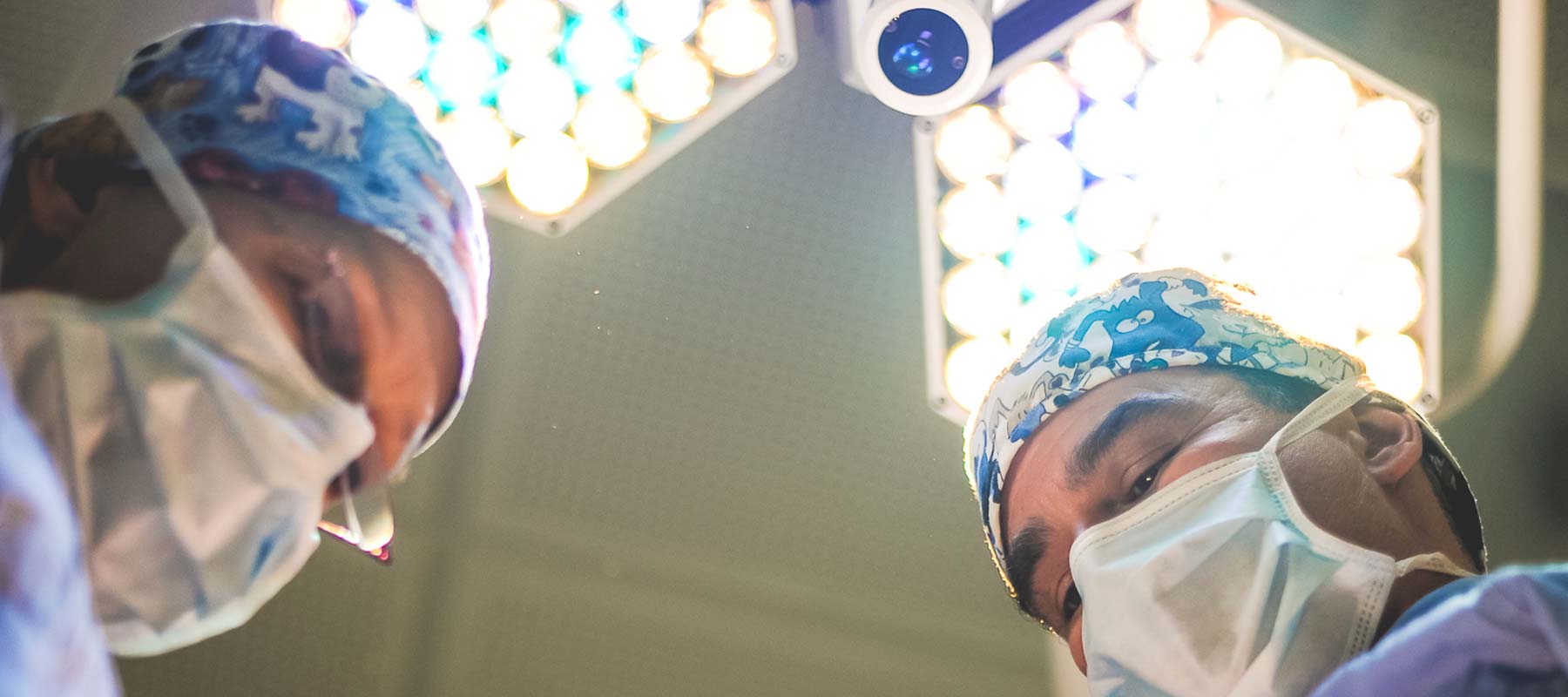
Minimally invasive surgery (MIC) in animals is a modern surgical method aimed at minimizing tissue damage during an intervention. This leads to less postoperative pain, shorter recovery time and smaller scars compared to traditional open surgical procedures. MIC includes various techniques such as Laparoscopy, thoracoscopy and Arthroscopy.
Benefits of Minimally Invasive Surgery
- Less pain: Smaller cuts and less tissue trauma lead to less postoperative pain.
- Faster recovery: The animals recover faster and can return to their normal activities earlier.
- Smaller scars: Smaller cuts mean less visible scars.
- Lower risk of infection: Less tissue damage and smaller cuts reduce the risk of infection.
- Better visualization: High-resolution cameras enable precise visualization of the operating field.
Indications for Minimally Invasive Surgery
- For diagnostic purposes: Examination and biopsy of organs and tissues.
- Therapeutic procedures: Removal of tumors, repair of hernias, castration and other interventions.
- Joint operations: Diagnosis and treatment of joint problems such as meniscus injuries or arthritis.
Methods of minimally invasive surgery
1. Indications: Sterilization (ovarianectomy/ovarian hysterectomy), removal of tumors, biopsy of organs, treatment of gastrointestinal problems.
2. Procedure:
- Anesthesia: The patient is placed under general anesthesia.
- Introduction of the trocar cannulas: Small cuts (about 0.5 to 1 cm) are made into the abdominal wall, and trocar cannulas are inserted to gain access to the abdomen.
- Insufflation: The abdomen is filled with CO2 gas to make room for the instruments and improve vision.
- Introduction of the laparoscope: A laparoscope (a thin, lit camera) is inserted through one of the cannulas to make the interior of the abdomen visible on a monitor.
- Surgical procedure: Special laparoscopic instruments are inserted through the other cannulas to perform the procedure.
- Wound closure: The cannulas are removed and the small cuts are closed with a few stitches or brackets.
Thoracoscopy
1. Indications: Diagnosis and treatment of diseases of the chest cavity, such as tumors, pleural effusions or heart defects.
2. Procedure:
- Anesthesia: The patient is placed under general anesthesia.
- Introduction of the trocar cannulas: Small cuts are made into the chest wall, and trocar cannulas are inserted.
- Insufflation: The chest cavity is filled with CO2 gas to partially collapse the lungs and make room for the instruments.
- Introduction of the thoracoscope: A thoracoscope (a thin, lit camera) is inserted through one of the cannulas to make the inside of the chest cavity visible.
- Surgical procedure: Special thoracic instruments are inserted through the other cannulas to perform the procedure.
- Wound closure: The cannulas are removed and the small cuts are closed with a few stitches or brackets.
1. Indications: Diagnosis and treatment of joint problems such as meniscus injuries, cruciate ligament tears or arthritis.
2. Procedure:
- Anesthesia: The patient is placed under general anesthesia.
- Introduction of the trocar cannulas: Small cuts are made into the skin above the affected joint, and trocar cannulas are inserted.
- Introduction of the arthroscope: An arthroscope (a thin, lit camera) is inserted through one of the cannulas to make the inside of the joint visible.
- Surgical procedure: Special arthroscopic instruments are inserted through the other cannulas to perform the procedure.
- Wound closure: The cannulas are removed and the small cuts are closed with a few stitches or brackets.
After-care
- Pain management: Pain medications and anti-inflammatory drugs are given.
- Motion restriction: The patient should spare a few days after the operation.
- Wound care: Monitoring of cuts for signs of infection or other complications.
- Physiotherapy: During joint operations, physical therapy may be necessary to rebuild mobility and muscles.
- After-checks: Regular veterinary examinations to monitor the healing process.
Forecast
The prognosis after minimally invasive procedures is usually very good. Most animals recover quickly and without complications. The minimally invasive nature of the procedures reduces the risk of infection and promotes faster healing compared to traditional open surgery.